The Final Bell: How London’s Closing Auction Sets the Price You Actually Get
For much of the trading day, a UK share price is a moving negotiation. A buyer meets a seller, a trade prints, and the tape rolls on. But the price that matters for many portfolios is not necessarily the last one printed in continuous trading. It is the official closing price, and in London that price is set through a closing auction rather than by the final casual trade of the afternoon.
That distinction is easy to overlook. It should not be. The closing price feeds fund valuations, benchmark calculations, performance reporting and a range of orders that investors place without thinking of themselves as auction participants. For anyone using market orders, stop-losses or index funds, the last ten minutes of the London trading day deserve more attention than they usually receive.
What the closing auction actually does
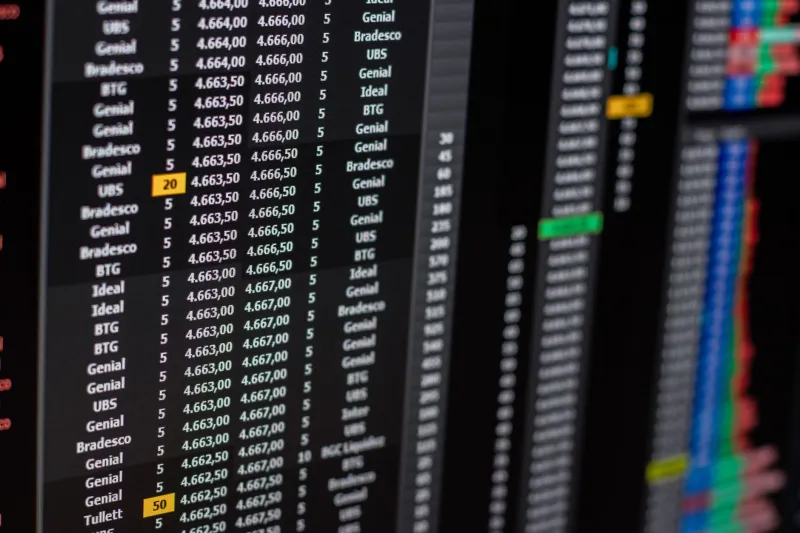
On the London Stock Exchange’s SETS order book, continuous trading gives way to a closing auction at 16:30. Orders are no longer matched immediately as they arrive. Instead, they accumulate, and the exchange publishes an indicative auction price as the book builds. At the uncrossing, the auction strikes a single price that maximises the volume executable across all orders in the book, subject to the exchange’s rules and any price monitoring arrangements. The London Stock Exchange also operates a random end to the auction period, so the precise moment of uncrossing is not fixed to the second.
The result is the official closing price. It is a crowd-sourced clearing price, not a courtesy snapshot. In a well-functioning auction, it reflects the balance of buyers and sellers at the close far better than the last trade before 16:30 might.
This is why the closing price travels further than the last trade. It is used to value portfolios, calculate daily fund prices and assess performance against benchmarks. It can also feed derivative settlements and contractual arrangements. For a FTSE 100 company, the closing print is a reference point for the wider market, not just for those who traded in the final minutes.
Why the closing price matters to ordinary investors
Most UK investors do not think of themselves as closing-auction participants. In practice, three common situations put them there.
First, market orders submitted close to the close. An investor who decides at 16:28 to buy or sell and sends an order without a price limit may find that the order is handled around the auction rather than in continuous trading. The execution price may be the auction price, which can differ from the last visible trade. That is not necessarily a bad outcome, but it should be a deliberate one.
Second, stop-loss orders. A stop-loss triggered in the final minutes can convert an intraday risk control into an auction execution. If the trigger is set at a round number just below the prevailing price, and several other investors have done the same, the resulting order flow can meet a thinner auction book than expected. The stop does its job, but the price achieved may be worse than the trigger suggested.
Third, index funds and ETFs. Passive vehicles that track a benchmark often need to trade near the close to manage tracking difference against the official closing price. The closing auction is therefore part of the plumbing of passive investing. An investor comparing an ETF’s price with its net asset value should understand that the closing auction, not the last continuous trade, is often the reference point.
The mistakes that recur
The first mistake is treating the last trade before 16:30 as the closing price. It is not. The auction can move the price, sometimes materially, especially on days with index events, company announcements or heavy order imbalances.
The second is using a market order into the close without checking the indicative auction price. The indicative price is published for a reason. It gives investors a sense of where the auction is likely to clear, and whether the balance of orders is favourable or unfavourable. Ignoring it is an unnecessary blind spot.
The third is assuming auction liquidity mirrors continuous liquidity. It may not. The auction concentrates order flow, which can be helpful, but the composition of that flow matters. A large seller meeting a thin book can produce a different outcome from the same order placed earlier in the day.
The fourth is placing stop-losses at obvious round numbers and assuming the trigger price is the execution price. Stop-losses are instructions to trade, not guarantees of price. Near the close, the gap between trigger and execution can widen.
A practical checklist for trading around the close in 2026
-
Confirm the timetable with your broker and the London Stock Exchange. Continuous trading ends at 16:30, but the auction has a random end. Do not assume the uncrossing happens at a fixed second.
-
Use limit orders where possible. A limit order gives you control over the worst price you will accept. If you use a market order near the close, understand that you are accepting the auction outcome.
-
Check the indicative auction price and any published imbalance information before submitting. If the indicative price is moving sharply, or the imbalance is large, consider whether the auction is the right place for your order.
-
Size the order for the auction, not for the continuous session. A position that is modest in normal trading may be large relative to auction liquidity. If in doubt, split the order or seek advice from your broker on execution options.
-
Review stop-loss arrangements. Avoid clustering triggers at round numbers. Consider whether a limit order or a monitored stop is more appropriate for the position, and remember that a stop triggered near the close may execute at the auction price.
-
For index funds and ETFs, read the tracking methodology. Understand whether the fund trades at the close and how it manages the difference between its execution price and the official closing price.
-
Keep records. Note the time of the order, the order type, the indicative auction price where available and the final execution price. If something looks unusual, you will have the evidence to query it.
The closing auction is not an afterthought to the UK trading day. It is one of the day’s most important price-discovery events. For investors who use market orders, stop-losses or passive funds, the last ten minutes are not a quiet footnote. They are part of the execution decision, and they deserve to be treated that way.